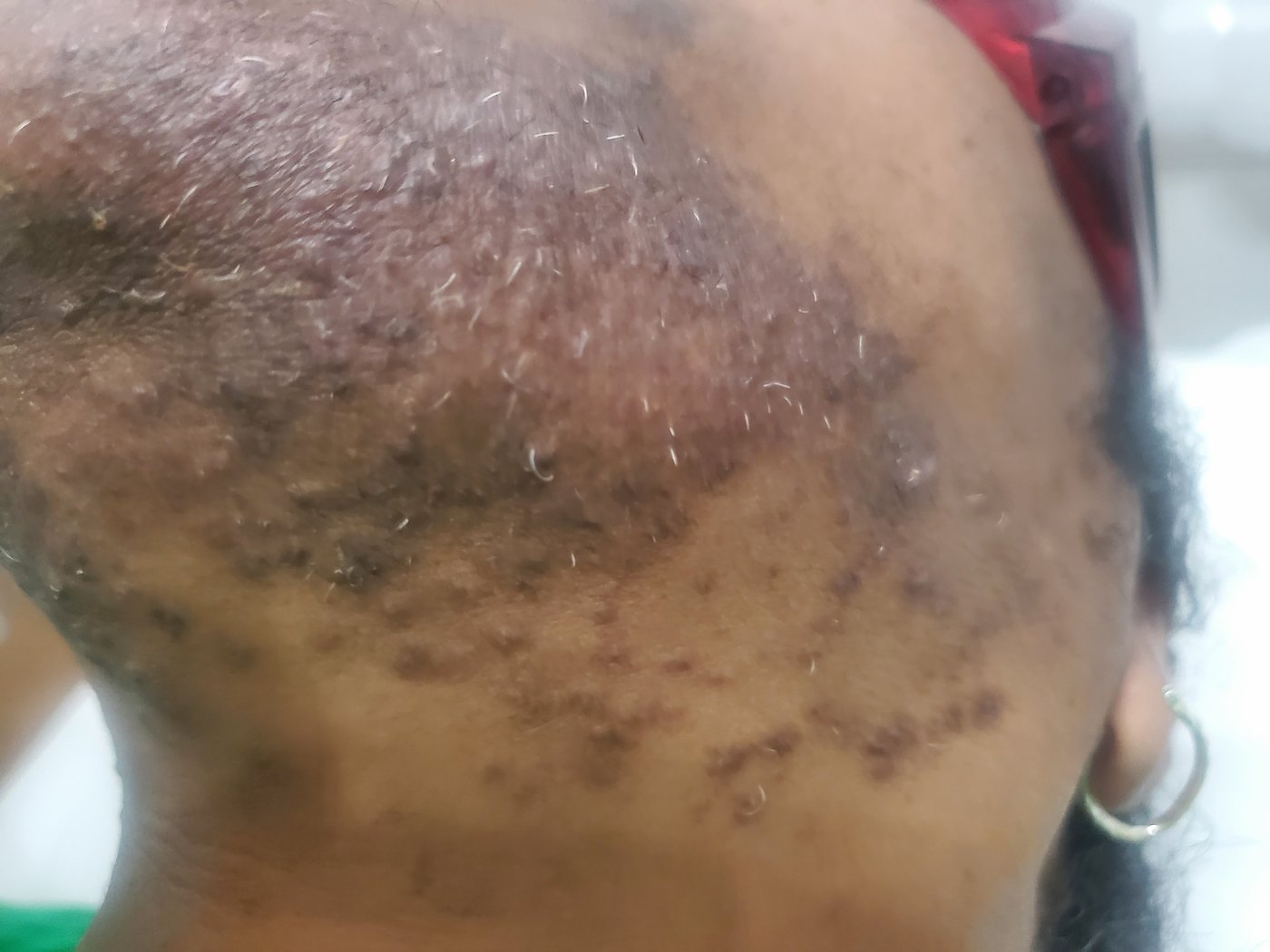
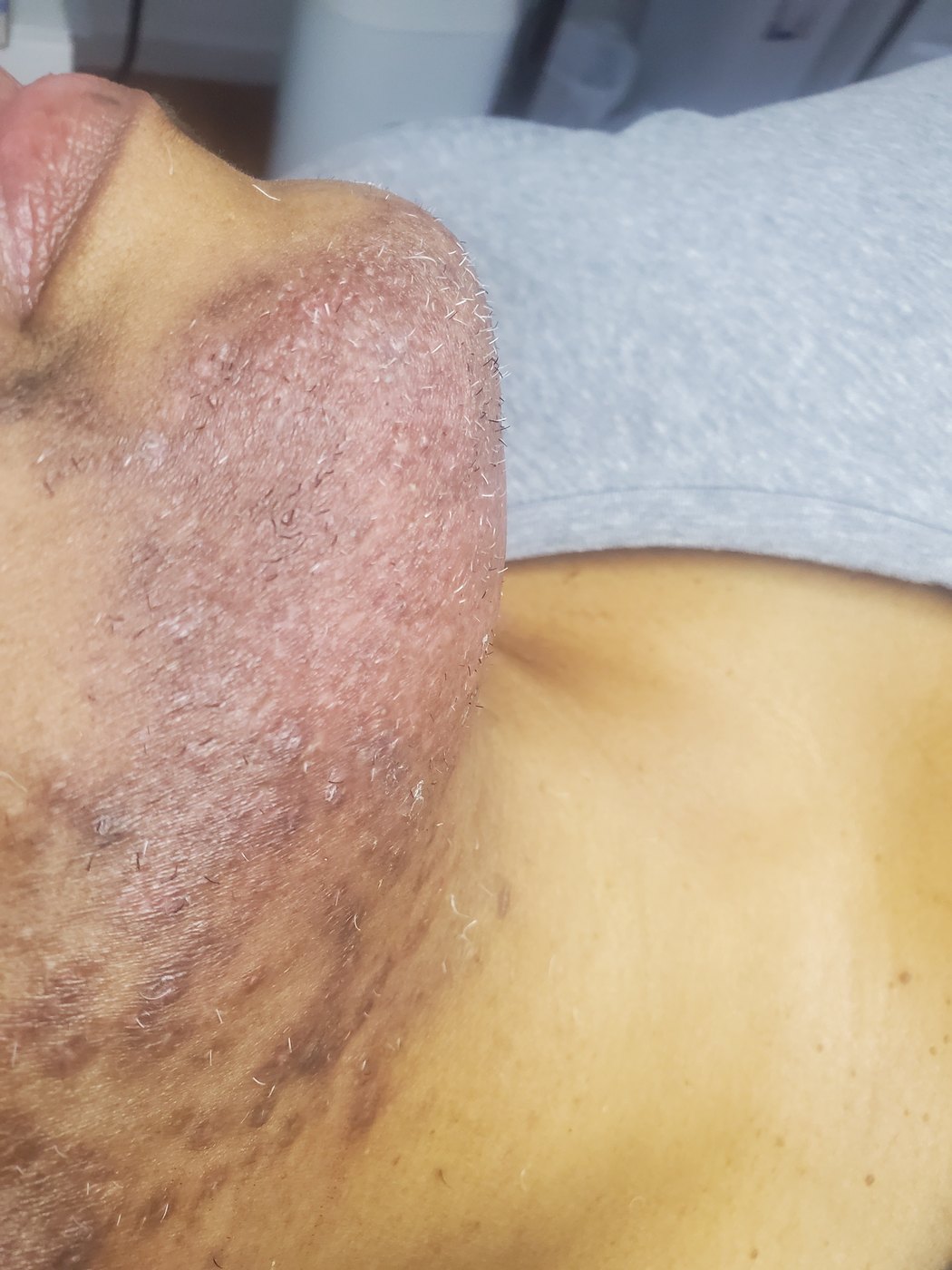
Why do Black women develop dark marks after shaving?
Answered by Eva Taub
I hear this question almost every week, and the first thing I tell women is this:
Shaving isn’t usually the problem. Irritation is.
Many Black women are told to stop shaving because they think the razor is causing the dark marks. In reality, it’s usually what happens after the shave that creates the discoloration.
Melanin-rich skin responds differently to irritation than lighter skin. When a hair becomes ingrown, a razor bump develops, or the skin is repeatedly irritated by a dull blade or poor shaving technique, your body responds by producing extra pigment as it heals. That process is called post-inflammatory hyperpigmentation, or PIH. It’s a normal healing response — but in melanin-rich skin, it’s much more noticeable and often lasts much longer.
That’s why two women can shave exactly the same way and have completely different results. One develops a temporary razor bump. The other develops a dark mark that remains for months. The difference isn’t the razor. It’s how their skin heals.
I also want to clear up another misconception. Shaving done correctly doesn’t cause dark marks. I actually teach many of my clients how to shave properly between treatments, because poor technique creates far more problems than careful shaving ever does. I recommend a fresh disposable razor, plenty of lubrication — I prefer hair conditioner instead of traditional shaving cream — and as little irritation to the skin as possible.
Once the dark marks are already there, the focus changes from prevention to treatment. After more than forty years working with melanin-rich skin, I’ve found that gentle approaches usually produce the best long-term results. That’s one reason I use mandelic acid. It gradually encourages healthy skin turnover without the irritation that can trigger even more pigment production.
Your skin isn’t overreacting. It’s protecting itself. The goal is to remove the irritation that’s causing the pigment in the first place — not simply to chase the dark marks after they appear.
How to get rid of dark spots on black skin after shaving
Women ask me this a dozen different ways. How do I get rid of the dark spots under my armpits. Why are my armpits darker than the rest of me. How do I fade shaving scars on black skin. Dark marks, dark spots, dark patches, razor scars — different words, one problem, and it has a name: post-inflammatory hyperpigmentation.
On black skin it behaves differently. The pigment sits deeper, it takes longer to clear on its own, and it returns every time the area is irritated again. That last part is why so many women feel that nothing works. Something did work — and then they shaved again.
What actually works, in this order
First, stop the irritation. As long as hairs keep curling back into the skin, the dark spots refill as fast as you fade them. For dark hair on black skin I use a long-pulse Nd:YAG laser. The wavelength matters more than the machine: Nd:YAG reaches the pigment in the hair without being absorbed by the melanin in the skin above it, which is exactly why it is the one laser that is safe on darker skin. Most of the burns and the worse-after-laser discoloration I am asked to correct came from an IPL machine turned down and called a laser.
Where the hair has gone white or gray, a laser cannot see it at all. That is electrolysis, hair by hair.
Then treat the dark spots themselves. Mandelic acid — not hydroquinone, not a bleaching cream, and nothing containing mercury. The mandelic acid molecule is roughly twice the size of glycolic, so it goes in slowly and evenly instead of fast and hot. Fast and hot is what makes hyperpigmentation on this skin worse, not better.
In that order. Fading the marks while the hairs keep coming back is bailing out a boat without plugging the hole.