LED & Oxygen Therapy
Written by Eva Taub
I love this treatment because there’s genuinely no risk profile to worry about — I recommend it almost universally, particularly for clients healing from something more intensive.
No heat, no wound, no downtime — and still a real, measurable effect on the skin.
What It Is, and How Light Alone Changes Skin Without Heat
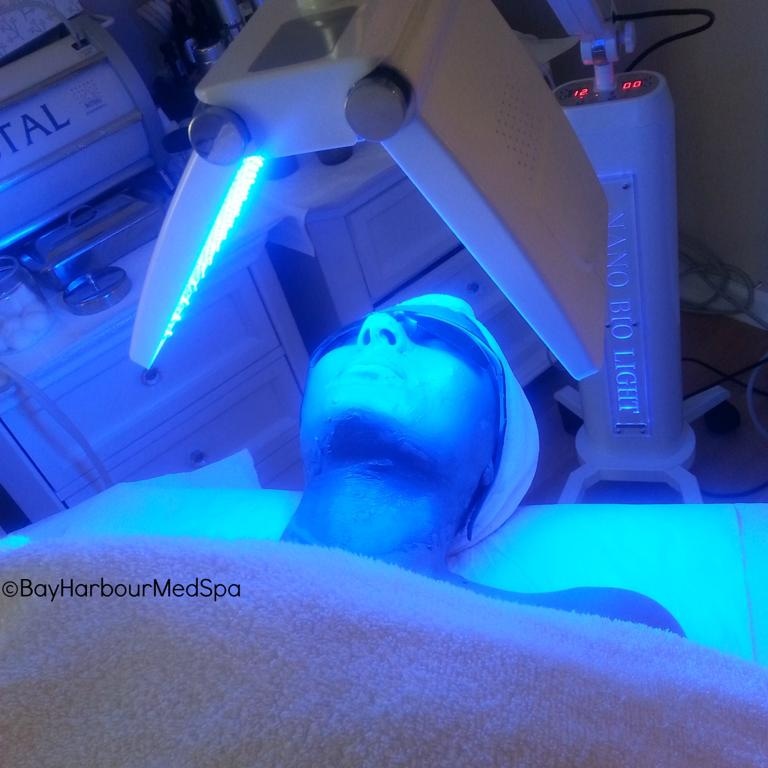
LED light therapy works through a mechanism called photobiomodulation: specific wavelengths of visible light are absorbed by light-sensitive molecules inside skin cells, and that absorbed light energy changes how those cells behave, without generating the heat that lasers and most other energy-based devices rely on. Blue light is absorbed by porphyrins — molecules produced by the bacteria involved in acne — and that absorbed light triggers a reaction inside the bacteria that helps destroy it, calming active breakouts without antibiotics or harsh topicals. Red light is absorbed by mitochondria, the energy-producing structures inside cells, boosting their energy output in a way that’s been shown to support fibroblast activity and circulation — part of why it’s associated with collagen support. Yellow light is used more for calming visible redness and supporting overall tone. Because none of this relies on heat or breaking the skin’s surface, there’s no wound-healing response required and no real downtime — a genuinely different mechanism from anything else in this practice.
Why Oxygen Infusion Is a Separate, Complementary Mechanism
Oxygen therapy is a distinct treatment I often pair with LED, working through a different route entirely: a gentle, pressurized stream delivers oxygen and hydrating serum directly toward the skin’s surface, boosting local circulation and helping product actually absorb rather than sit on top of skin. It’s a delivery and circulation mechanism, not a light-based one, which is why the two pair well — they’re supporting skin health through genuinely different pathways at the same session.
What I correct most often:
“It works instantly.” It doesn’t — the cellular changes triggered by light absorption are real, but cumulative, meaning results build with consistent sessions rather than appearing after one visit.
“At-home LED masks work as well as professional treatment.” They don’t, mainly because of power output — home devices are generally much lower-powered than what I use in-office, so while the mechanism is the same, the dose delivered per session is meaningfully smaller.
“This is basically the same as laser, just gentler.” It isn’t the same mechanism at all — laser relies on generating heat at a target (see the Laser Hair Removal page for that mechanism), while LED relies on light absorption changing cell behavior with no heat involved.
Who It’s For, and Who It Isn’t
Clients with active acne, dull or tired-looking skin, post-treatment healing support, or anyone wanting a gentle, no-downtime addition to their routine. If you have a light-sensitivity condition or take photosensitizing medication, we discuss that first. This is supportive care, not a standalone solution for significant pigmentation or scarring.
What Getting Results Actually Looks Like
Best used as part of an ongoing routine — weekly or biweekly sessions build real results over time, rather than one visit solving anything on its own.
Frequently Asked Questions
Is this safe on melanin-rich skin, since so many light-based devices aren’t? Yes — the risk in most light and laser devices comes from heat generated at melanin, which is exactly what selective photothermolysis in laser hair removal relies on. LED doesn’t generate that kind of targeted heat, which is why it doesn’t carry the same pigmentation risk.
Can I do this the same day as laser or RF microneedling? Often yes, and it’s frequently used specifically to support healing after those treatments, since it’s non-heat and non-invasive — I’ll confirm timing based on your specific treatment plan.
Safety and Aftercare
No real downtime; skin can be treated normally right after. I just ask clients to skip intense heat treatments the same day, as a courtesy to freshly treated skin.
Related Treatments
Frequently paired with High-Frequency Therapy and Mandelic Acid Peels as part of an ongoing Hormonal Acne care routine.
Watch: LED Light Therapy
24 videos from my YouTube channel on this exact subject.