Intimate Area Lightening
Written by Eva Taub
This is one of the concerns clients feel most private about — I’ve had women whisper it to me, or write it on an intake form rather than say it out loud, or apologize before they’ve even described what’s bothering them. I want to say something plainly before we go any further: this is one of the most common things I treat. You are not dirty, you are not alone, and nothing about your body did anything wrong. I’ve learned that women will often live with embarrassment much longer than they’ll live with discomfort. I’ve spent decades treating discoloration in the bikini line, underarms, and inner thighs, and I want to actually explain it to you properly — not the two-line version most places give you, but what’s really happening in your skin, why it happens, and why so many of the products marketed to fix it make it worse instead.
What’s Actually Happening in Your Skin
All skin color comes from melanin, produced by cells called melanocytes sitting in the base layer of your skin. Melanocytes are part of your body’s protective system, and they don’t just sit at a fixed output — they respond directly to signals: ultraviolet light, inflammation, hormones, and physical trauma all tell melanocytes to ramp up production. When skin anywhere on your body is irritated, injured, or inflamed, melanocytes in that specific area are stimulated to produce more melanin and push it toward the surface as a protective response, the same way a bruise or a callus is your body responding to repeated stress. This process is called post-inflammatory hyperpigmentation, and in melanin-rich skin, that response is significantly more pronounced than in lighter skin — which is exactly why irritation that would barely mark lighter skin can leave a lasting dark patch on darker skin.
The bikini line, underarms, and inner thighs are simply the areas of your body that accumulate the most of the specific triggers that activate this response — which is the honest answer to “why here.” It isn’t about those areas being different or defective. It’s that friction, shaving, sweat, and product exposure concentrate there more than almost anywhere else on the body.
Your skin isn’t dirty. It’s protecting itself.
The Mechanical and Friction Causes
I want to be precise here, because this gets blamed on shaving itself far too often: shaving done correctly — a fresh, sharp disposable blade, and hair conditioner instead of shaving cream — does not cause this kind of irritation or discoloration. What actually causes it is shaving done incorrectly: a dull or old blade dragging repeatedly across the same skin, or dry shaving without any lubrication at all. That’s real, repeated micro-trauma at the surface, and it’s entirely avoidable with the right technique and fresh blades, not an inherent risk of shaving itself. Waxing is a different situation, because it pulls the hair out by the root, creating a genuine wound response at each follicle regardless of technique. Ingrown hairs compound both: a hair curling back into the skin is a foreign-body irritation your immune system responds to directly, and folliculitis — infected or inflamed follicles, sometimes from bacteria introduced during improper shaving or waxing — adds a second, more aggressive inflammatory trigger on top of that. Tight clothing adds constant low-grade friction and heat, and traps moisture against skin that’s often already irritated, which extends how long that irritation stays active instead of letting it resolve.
The Hormonal Causes
Hormones influence melanocyte activity directly, which is why hormonal shifts of almost any kind can trigger new or worsening pigmentation independent of friction entirely. Estrogen and progesterone both affect how actively melanocytes produce pigment, which is why pregnancy — when both hormones surge — so often brings new darkening not just to the well-known midline of the abdomen, but to the bikini line, inner thighs, and underarms too. Menopause brings a different hormonal shift, and I see new pigmentation show up then as well, often alongside the same hormonal hair changes I treat constantly at that stage of life.
PCOS is a significant driver for a different reason: elevated androgens don’t just stimulate hair follicles, they also affect skin cell turnover and pigmentation in ways that compound with any friction-based irritation already present. And insulin resistance — which frequently accompanies PCOS, but can also occur on its own — deserves its own explanation, because it can produce a specific, distinct kind of discoloration.
A distinction worth knowing: ordinary friction discoloration vs. acanthosis nigricans. Most of what I see is flat, smooth darkening from friction and irritation. But some patients have skin that’s also thickened and velvety to the touch, not just darker — usually in the same folds and creases (neck, underarms, groin). That specific texture change has a name, acanthosis nigricans, and it’s a recognized marker of insulin resistance, not just a cosmetic variation. I’m not a physician and I don’t diagnose insulin resistance, but if your skin has that velvety texture change, not just color change, I will always tell you it’s worth mentioning to your doctor — it’s genuinely useful information about what’s happening hormonally, not just a skin concern in isolation.
Deodorants, Weight, and Genetics
Deodorants and antiperspirants are a less obvious but very real trigger. Many contain fragrance and chemical ingredients that irritate skin with repeated daily use, and that irritation, combined with the friction of shaving the same area, stimulates the same melanocyte response described above — part of why underarm darkening is so common and so persistent even in women with no other pigmentation concerns anywhere else on their body.
I also want to address carrying extra weight directly and without judgment, because it’s a real, physiological factor, not a moral one: skin-on-skin friction in body folds increases with body size simply as a matter of mechanics, and carrying extra weight is also independently linked to insulin resistance, which layers the hormonal mechanism described above on top of the mechanical one. Genetics plays a real role too — family patterns in how reactive your specific melanocytes are, and your Fitzpatrick skin type, meaningfully affect how visibly your skin responds to the same triggers someone else might barely show. None of this is about doing anything wrong. It’s biology responding to real, identifiable inputs.
Why Bleaching Creams, Hydroquinone, Mercury Creams, and Steroids Make This Worse
This is the section I most wish every woman read before buying anything. Hydroquinone works by inhibiting tyrosinase, an enzyme melanocytes need to produce melanin, and it is not something I use on any client, at any concentration, supervised or not. I know it’s still prescribed and sold widely, and I know some dermatologists consider low-dose, monitored use acceptable — that is simply not my approach, and I don’t think it needs to be anyone’s. Unsupervised, prolonged, or high-concentration use can cause rebound darkening once you stop, and in rare but real cases, a condition called exogenous ochronosis — a permanent blue-black discoloration that is far harder to treat than what you started with. Zero hydroquinone, in my practice and in every product I formulate, is the standard. Not a smaller amount. None. Women are often shocked when I tell them I don’t use hydroquinone at all. After forty years treating melanin-rich skin, I’ve simply found a different path that I trust more.
Fast lightening usually creates slow problems.
Mercury-containing skin lightening creams are a serious public health problem, still sold in some markets despite being illegal in the United States specifically because mercury is absorbed through the skin and can cause genuine systemic toxicity — kidney damage among the most serious risks. If a lightening product doesn’t list its full ingredients clearly, that alone should be a warning sign, not a reason to trust it more.
Steroid creams cause a different, quieter kind of harm. Topical steroids can temporarily suppress inflammation and appear to lighten skin, which is exactly why they get misused for this purpose — but sustained use thins the skin, causes visible stretch marks, and often triggers a rebound worse than the original discoloration once stopped. None of this is about scaring you away from all treatment. It’s about explaining precisely why the products marketed most aggressively for fast lightening are so often the ones that cause lasting damage.
Why Gradual, Mandelic-Acid-Based Treatment Is Safer
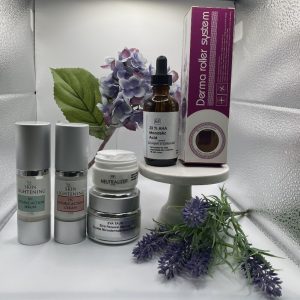
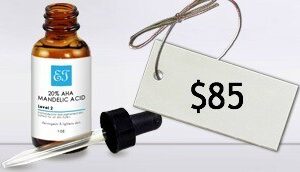
Every mechanism described above shares one thing in common: the discoloration comes from an overactive melanocyte response to irritation. That means the single most important property a treatment can have is not triggering more of that same irritation while trying to fade it — which is precisely where fast, aggressive, high-strength acids and bleaching agents fail, and often make things worse. This is why I built my approach in this area, as in the rest of my practice, around mandelic acid. It has one of the largest molecular structures of any AHA, so it penetrates slowly and gently, exfoliating pigmented, damaged skin cells without over-triggering the same melanocyte response that faster acids provoke — I’ve written the full mechanism out in more depth on the Mandelic Acid Peels page. No hydroquinone, no bleaching agents, calibrated specifically for how sensitive intimate-area skin is compared to the face.
Gentle skin care requires patience. Damaged skin requires years.
Technique Demonstration: Applying the Mini Eva Skin Lightening Treatment
This is a demonstration on a mannequin, showing exactly how the treatment is applied — not a before-and-after result on a real client.
Why I Use Ozone Alongside It
For more persistent cases, I layer in ozone-based treatment — delivered through my Activated O3 Oxygen Serum and in-office protocols — alongside the mandelic acid routine. In my clinical experience, ozone helps create an environment where irritated skin appears calmer as it heals, and helps calm the ongoing low-grade inflammation that keeps the melanocyte response switched on, which matters most for clients whose discoloration is being driven by chronic friction or folliculitis rather than a single past injury. I want to be honest that this is a supportive, adjunct part of the protocol based on what I’ve observed clinically over many years, not a standalone fix — it works alongside the mandelic acid foundation, not instead of it.
Home Care and Maintenance
A zinc oxide mineral sunblock matters here just as much as it does on the face, and it’s the step people skip most on areas that stay covered by clothing — but covered doesn’t mean protected forever, and any UV exposure that does reach the area works against fading progress. Zinc oxide sunblocks go on white at first and then sheer down once they’re worked into the skin, which is what makes them such a comfortable, non-irritating choice even on melanin-rich skin. Loose clothing to reduce ongoing friction, switching to a gentler deodorant if that’s a contributing factor, and consistent gentle care rather than infrequent strong treatment are what actually maintain results. Because so many of the underlying triggers — hormonal cycling, ongoing hair removal, friction from daily movement — don’t simply stop, this is genuinely a maintenance relationship with your skin, not a one-time fix you complete and forget.
Realistic Timeline and Expectations
Gradual improvement with consistent use is typically visible within several weeks, though meaningful, lasting fading generally takes 8 to 12 weeks or more of steady care, in line with how long melanin-rich skin takes to visibly respond to any gentle, non-aggressive treatment. If a hormonal driver like PCOS or ongoing insulin resistance is still active, some degree of ongoing management is honest to expect, the same way it is for facial hyperpigmentation. The realistic goal is genuine evening of tone and significant fading — not lightening past your natural pigmentation, which was never the goal, and not necessarily a permanent, one-time erasure if the triggers behind it are still present in your life.
What I correct most often:
“These products contain bleaching agents like hydroquinone.” Not this approach — the goal here is gentle exfoliation and tone-evening, never bleaching, and never hydroquinone.
“This area can’t be safely treated at all.” It can, and responds well, with the right gentle approach and a provider who takes the sensitivity seriously.
“Darker skin is just naturally like this, nothing can be done.” False — what you’re seeing is a specific, treatable response to identifiable triggers, not a fixed feature of your skin tone.
“A stronger product will work faster.” This is the myth that causes the most damage in this specific area, because intimate skin is thinner and more reactive than facial skin — strong acids and bleaching agents here provoke exactly the irritation that causes more pigment, not less.
What I’ve Learned After 40 Years, and What I Tell Every Patient
The pattern I’ve watched most consistently, across thousands of clients, is that women arrive having already tried the fast option — a strong cream, sometimes one they weren’t fully sure was safe — and it made things worse before they ever got to me. What I tell every patient is the same thing: gentle and consistent beats fast and harsh, every time, on this skin, in this area especially. This isn’t a slogan I use for marketing. It’s what four decades of watching what actually works, and what quietly causes more damage, has taught me. I would rather give you an honest 8-to-12-week timeline than a fast promise that leaves you with a deeper problem than you started with.
Your goal should never be to become lighter than you were born. Your goal is to become you again.
Who It’s For, and Who It Isn’t
Clients experiencing discoloration from shaving, friction, deodorant sensitivity, or hormonal factors like PCOS, pregnancy, menopause, or insulin resistance, seeking a gentle, non-bleaching approach to evening skin tone. This isn’t for anyone seeking dramatic lightening beyond their natural tone — it evens tone, it does not lighten skin past its natural pigmentation. Not appropriate on broken or irritated skin.
Frequently Asked Questions
Is this the same as vaginal bleaching? No — I don’t lighten skin beyond its natural tone. This evens out discoloration caused by friction, hormones, or irritation, back toward your own natural pigmentation, not past it.
Will shaving less make this go away on its own? It can reduce new irritation, but it won’t fade discoloration that’s already there — that needs active, gentle treatment, the same way a dark mark anywhere else on the body does.
I have PCOS and insulin resistance — will this ever fully go away? Honestly, as long as the hormonal driver is active, some ongoing maintenance is realistic to expect, the same way it is for facial hair or facial pigmentation from the same cause. Managing the hormonal side with your physician alongside what I do cosmetically makes a real difference over time.
Can I use over-the-counter lightening products alongside this? I’d want to know exactly what’s in them first — many contain hydroquinone or other ingredients that work against a gentle approach. Bring me the ingredient list before combining anything.
Safety and Aftercare
Loose clothing to reduce friction, avoiding harsh deodorants or fragranced products on treated skin, a zinc oxide mineral sunblock where the area is exposed, and consistent gentle care rather than frequent strong treatment.
Watch: Intimate Area Lightening
53 videos from my YouTube channel on this exact subject.